
Raw Land Turned Into Livable Private Property
Acreage estate development in Lindale for multi-structure properties requiring full site infrastructure and master planning
Multi-acre properties in East Texas present a different set of decisions than a standard residential lot—there is no existing utility stub, no graded pad, and often no clear entry point for a driveway that accounts for drainage and long-term stability. Redd Construction & Development, LLC works with landowners to convert raw acreage into fully planned, buildable estate properties, managing everything from initial site evaluation to coordinated utility placement and final construction. Clients who own land in areas like Winona or outside Lindale often discover that the land itself requires as much planning as the structure that will sit on it.
The process begins with site planning that accounts for grading, foundation positioning, and water management across the full property footprint. Redd Construction & Development coordinates with well and septic contractors where municipal connections are unavailable, and structures the grading work so that drainage moves away from the home's foundation rather than pooling beneath it. Clients walk the property through 2D and 3D planning tools before any ground is broken, so the placement of the main structure, guest quarters, driveways, and utility corridors is understood and confirmed in context rather than interpreted from a flat drawing.
Arrange a site consultation to review your land's grading requirements and infrastructure options before planning begins.
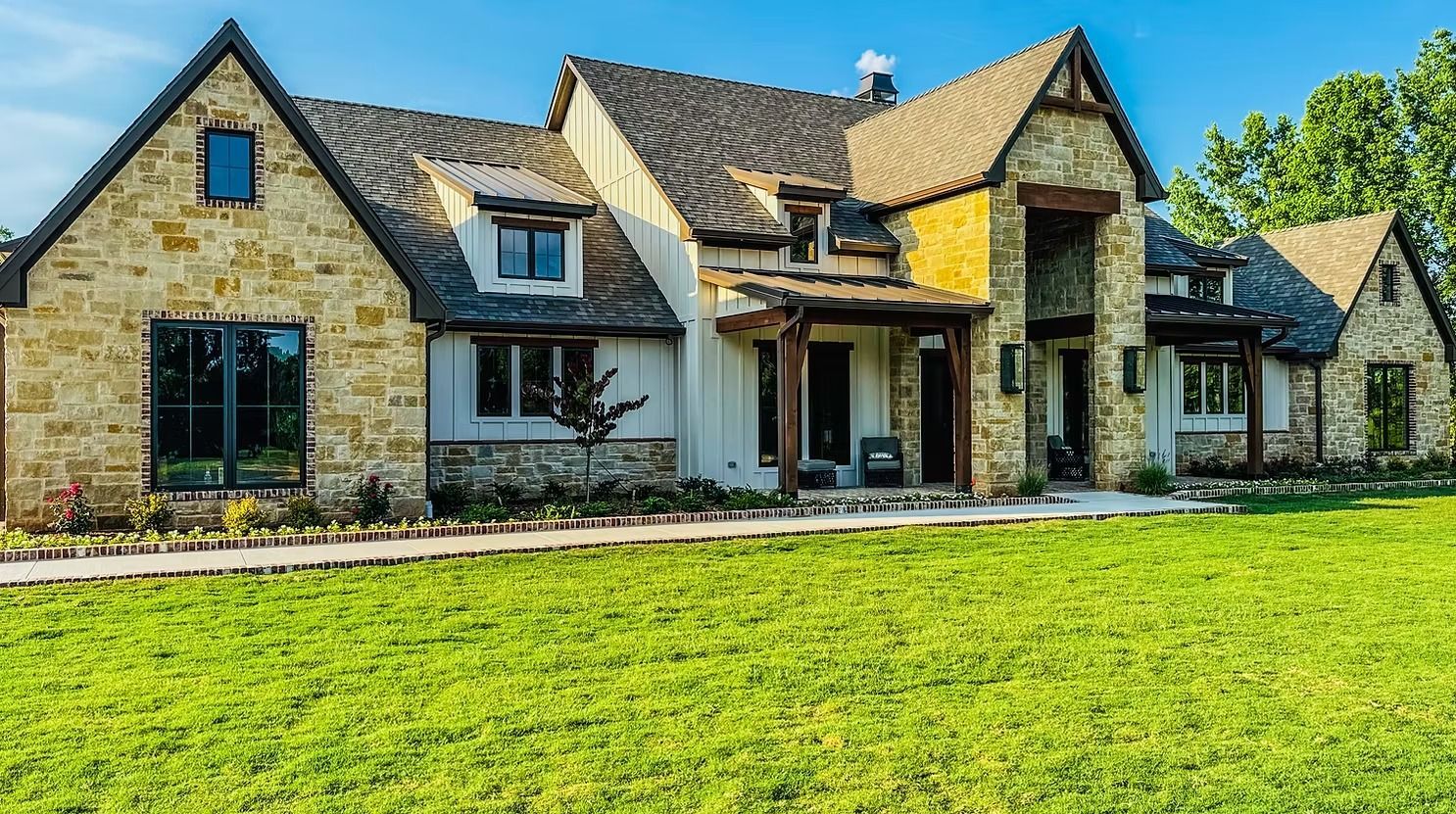
How Site and Structure Planning Work Together
On a multi-acre build, the position of the home on the land is not simply an aesthetic decision—it determines where septic fields can be placed, how far utility lines must run, where a private driveway must be graded, and whether the foundation will require engineered fill or cut-and-fill sequencing to achieve a stable bearing surface. These decisions interact, and resolving one without accounting for the others creates costly corrections later. Redd Construction & Development approaches site and structure planning as a unified scope, not two separate phases handed off between different contractors.
Once grading, infrastructure placement, and foundation work are complete, clients typically notice that the property functions as a coherent system rather than a collection of disconnected improvements—the driveway reaches the home without ponding at low points, utility service arrives cleanly, and the building pad sits at the correct elevation relative to surrounding terrain. Accessory structures such as guest quarters, equipment storage, and outdoor amenity areas are positioned during the master planning phase so their utility connections and access routes do not conflict with the primary residence.
Perimeter planning, security infrastructure, and luxury outdoor facilities are incorporated into the master site plan rather than added as afterthoughts, which means electrical and water routing for those amenities is factored into the original utility layout. The difference between an estate that reads as a unified property and one that feels assembled over time typically comes down to whether those elements were part of the original plan or retrofitted after the main build was complete.
What Property Owners Ask About Acreage Estate Builds
Acreage development involves decisions that standard residential construction rarely requires. The questions below address how site-specific conditions shape the planning and construction process on multi-acre East Texas properties.
What happens if my land does not have access to municipal water or sewer?
When city connections are unavailable, well and septic systems are coordinated as part of the site infrastructure plan, with septic field placement determined by soil percolation testing and setback requirements before the home's position is finalized so both systems work without conflict.
How does grading affect foundation performance on a large rural lot?
On acreage properties, grading establishes the drainage slope across the entire site, directing water away from the foundation's perimeter; when grading is done after the foundation is set rather than before, the opportunity to correct low points that trap water is largely lost.
Why does driveway alignment matter beyond simple access?
A private driveway on a multi-acre property must be graded to prevent erosion and water intrusion at the home entry, and its alignment affects where culverts are needed, how utility lines are buried alongside it, and what surface material will hold up under vehicle weight without repeated maintenance.
What does the 3D walkthrough process show that a standard site plan does not?
The 3D walkthrough allows you to see the relationship between the home's elevation, the surrounding land, and the placement of accessory structures from a ground-level perspective, which makes it possible to identify conflicts—like a guest quarters blocking a sightline or a utility easement cutting through a planned amenity area—before construction begins.
How are multi-structure estates sequenced during construction on acreage in Lindale?
The primary residence foundation and utility infrastructure are typically established first so that power, water, and site access are available for subsequent structures, with accessory buildings and outdoor amenity areas sequenced to avoid equipment congestion and to reuse grading work already completed across the property.
Redd Construction & Development, LLC also builds acreage estates in Kilgore, Tyler, Bullard, Winona, and Jacksonville. If you own land and are ready to move from raw acreage to a fully planned estate property, contact Redd Construction & Development, LLC at (903) 630-8660 to begin with a land evaluation and site planning discussion.